Search This Blog

Thursday, 28 December 2017

Christmas Letter with a Difference

It's that time again....
Every year at this time I dread the Christmas family letters - most especially, strange as it may seem, the ones from Christian friends.

Why?

For one thing, as a general rule, Christian annual letters gloss over all the difficult stuff in the last year and like Facebook, portray the past year as one long season of bliss.

(It's why so many people who live off social media are depressed. They read about the lives of their friends who have air-brushed out the ordinary disappointments of life and they become unhappy by the contrast with their own troublesome lives.)

Another reason I despair of those annual letters - and this is the most tragic reason - is this: they are generally full of earthly achievements and devoid of any spiritual ones.

Parents boast about their kids like yea:

   "John passed Grade 7 Oboe"

   "Susan got a new job as a manager"

   "Fred graduated with a 2:1 degree in XYZ"

When these earthly achievements are mentioned without any reference to the child's spiritual condition or spiritual growth we must be truly saddened.

Should not a Christian parent write something more like this?

   "My middle son has grown in grace this past year and is serving Christ in his local church with the gifts the Lord has given to him."

  "My third daughter gave us great joy in 2017 by being baptised in the spring, giving witness to the faith she has in the Lord Jesus."

   "Please pray for my youngest son who remains backslidden."

Someone needs to say OUTLOUD that what grade John has achieved in Oboe, what high-faluten job Susan may have found, what degree Fred graduated with - all of these are totally and utterly insignificant compared with the spiritual condition of the child.

In the world to come these worldly "achievements" won't matter one single half hoot and will be completely unknown.

So I dread reading the Christmas letters, and rarely do I come away from that annual sitting without a sense of profound sadness at our upside down priorities.

A Christmas Letter with a Difference
This year, however, we received one Christmas letter which cheered our hearts. Here's what one member of this family said:

"This year will go down in my books as a year of the Lord drawing near to me. Through some special times of prayer and worship, I have felt God increasing my faith and courage to serve him in some challenging situations. I am discovering anew that the real Blessing in life is More of Jesus."

This believer was honest about "challenging situations" in life. And this believer made their personal contribution to the letter all about knowing God better.

What we speak - and what we write therefore - reveals the true state of our hearts, and our true priorities for both ourselves and our families.

What really matters to you, to me, to us? Temporary, passing matters, or spiritual and eternal ones?

This unusual Christmas Circular Letter ended with the following Bible verse:

"I say to the Lord, 'You are my Lord; I have no good thing apart form you.'" (Psalm 16:2) 


Friday, 15 December 2017

What shall we make of Christmas?

Every year I - an evangelical Bible-believing Christian - struggle to know what to make of Christmas, what to do with Christmas, why I should bother about Christmas. I know that this sounds so unsentimental especially since there are some genuinely good aspects to this season of the year.


OPTION 1: Opt Out Completely?
I have a good Christian friend who has nothing whatsoever to do with Christmas. He sends no cards and gives no presents. On Christmas day he stays at home on his own. His reasoning is two-fold: that Christmas is nowhere commanded in Scripture and secondly he does not wish to be associated with the excesses of  "Christmas" as it is celebrated in the world.

We must say that this is a valid Christian option and no-one can or should judge a believer who deliberately opts out of Christmas. It's not only the heretical JWs who opt out of Christmas, true and genuine believers can also - with a clear conscience - give Christmas a miss.

(I have yet another Christian friend who opts out of Christmas because he has no earthly family and since in the media Christmas hype is all about "great family times" he feels he can have nothing to do with it).

The problem with opting out completely is that it can be read wrong by our non-Christian friends.

OPTION 2: Act just like the World?
The second option is to "do Christmas" like the world does. Christmas means different things to different people in the world, but there are two widespread attitudes that pervade our culture's approach: Christmas is an opportunity for excess (in every area of life) and Christmas is the time to spend / waste great sums of money. Yes, mixed in with these two attitudes are better elements, such as spending time with family, giving to charities and attending the annual  Carol Service, but those ingredients don't sweeten secular Christmas enough to warrant this as a Christian option. 

OPTION 3: A Sober Annual Assessment
The third option is a sober assessment of Christmas in the light of Scripture and conscience year by year. Here are some questions that may help us on our way...

Do we really need to spend/waste so much money on presents?
Do we need to buy and eat so much food?
How does self-control, one of the fruits of the Spirit, shape our attitude to Christmas?
How can we spend time blessing the lonely?
How can we bless family members who are not believers?
How can we use the time evangelistically?
How can we use the time to build ourselves up spiritually?
Could we not spend some of the extra time we have knowing Christ better?

There is no single Christian approach to Christmas. Within the church we should expect to find many shades of opinion and none should judge the other:

"Do not let anyone judge you by what you eat and drinking, or with regard to a religious festival, a New Moon Celebration or a Sabbath day. These are a shadow of things that were to come; the reality, however is found in Christ." (Col 2:16)
 

Friday, 1 December 2017

The Noble Tim Farron


Image result for tim farronThat red face
Some of us will remember the pain of Tim Farron before he resigned as leader of the Liberal Party. He was hounded by the press to say the sentence which the western press insist you say if you are to be regarded as one of the "in crowd", the sentence, which if you refuse to say, makes you roadkill.

Here is the litmus-test sentence, by which everyone is judged today - if you agree with this sentence you are "in", if you disagree, you are clearly and obviously wicked: 

        "Homosexual practise is not a sin."

Those of us who love Christ and want to be faithful to him are not ashamed to say that homosexual practise is a sin. The Bible calls it a sin both in it's radical affirmation of heterosexuality and in its condemnation of homosexual practise.

The Apostle Paul calls homosexual practise unnatural, indecent and a perversion (Romans 1).

All sin is wrong, so we who love Christ do not put ourselves one wit above anyone else, nor do we condemn practising homosexuals, for the love of God has even reached even us and all who repent of their sin and turn to Christ find hope and new life.

We remember the embarrassment  of Tim Farron, as relentlessly hounded by one journalist and then by another, he was forced to say on TV the modern day equivalent of "Caesar is Lord."

The retraction
Tim Farron has now written a long article which in effect is his retraction, and also a spirited attack on the illiberal society we now live in.

If you think we live in a culture of free speech, think again - and read Farron.

Well done, Tim, well done our brother in Christ. 

It's worth reading in full:

Tim Farron's Lecture


Tuesday, 28 November 2017

The Demands of Making Disciples in the Western World


The Need for Reformation
The need for reforming the church never goes away, and the problem is always the same: the church becomes like the world in its thinking and its practices.

This lame aping of the world becomes more problematic the further our western culture drifts away from its Christian moorings. The need for reformation becomes more urgent as time passes.

And one of the ways the church needs to reform its ways is in its vision of discipleship.

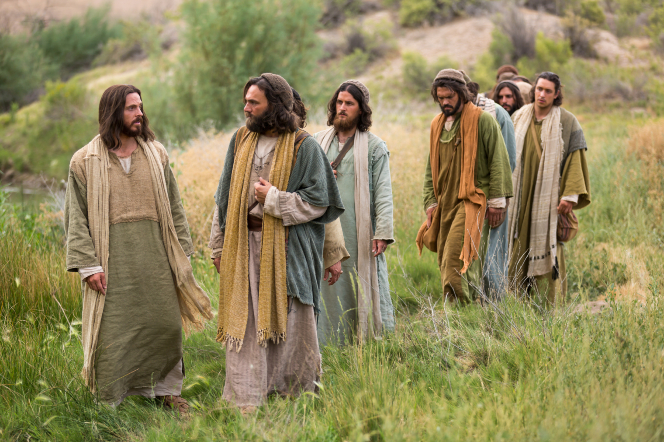
Matthew 16:21–28, Jesus walks with His disciples
Jesus spent long hours with the Twelve
The central task of the church
The task of the church is to "make disciples of all nations" (Matthew 28). It is not to fill the heads of converts with dry academic doctrine, but to turn them, by the grace of God, into fully signed up followers of Jesus Christ - in character and life.

If we were to ask any one of the 11 disciples what Jesus meant when he said "make disciples of all nations", they would have said "do for the world, what I have just done for you."

Here are some of the characteristics of New Testament discipleship:

(1) Lots and lots of time. Jesus did not ask the Twelve to show up for a talk twice a week, but spent many, many long hours with his disciples. There is probably a certain number of hours per week, below which no real effective discipleship will ever take place. I don't know what that number is, but it is more than two.

(2) Spend organic time with. Jesus did not merely spend "classroom" time with his disciples, he did "life" with them. They were with him in all sorts of circumstances, not merely in teaching settings.

(3) Formal and informal teaching. Jesus sometimes had a set "body" of teaching he had to deliver, (for example, the sermon on the mount), at other times he responded to something around him or something going on in the lives of his disciples. If the disciples were proud or prayerless or faithless he would address that issue there and then: informal teaching burns into the mind and heart.

(4) Constant counter-teaching. Jesus is always teaching against the background of the false teachers of his day. In other words, his teaching had a very large corrective element in it. "You have heard it said.... but I say.." Jesus was the first and greatest reformer. 

There are many pressures against this kind of true discipleship taking place today. The powerful current of traditional meet-twice-a-week religion is one. The love of pleasure is another - because the demands of this kind of discipleship on our time will mean many personal and family sacrifices will have to be made. The desire for large numbers which often makes the one-to-twelve discipleship process much less likely to happen is a third.

In the end it is only the power of God's Spirit that can make true disciples, but followers of Christ are called to be co-workers in this great task.

Thursday, 23 November 2017

The Great Reformers Had Great Flaws

Great Reformers
The Great Reformers of the 1500s - and indeed in every age - had equally great flaws. We rightly thank God for the Luthers, Zwinglis, Bucers and Calvins. Through them the Gospel was restored to the church, having been lost for a thousand years under the rubble of human tradition and satanic error.

To then add that they had great flaws is not to be judgemental. A judgemental spirit is a spirit that puts onself above the reformers, and since we are all sinners saved by the grace of our Lord Jesus Christ, alone, none of us has  the right to judge another.

No, to acknowledge their faults is to glorify the God who is pleased to work through flawed people for his great glory.

Some of the great church Reformers
One Example - their argumentative nature
The Reformers of the 1500s lived in a brutal age and this spilled over into language. To be honest, we live by contrast in a namby-pamby culture of washed out greys, so we should not over-judge them for their loud language.

Unfortunately, it was their argumentative spirit which ill-served them.

Erasmus, the "humanist"
Erasmus was the most famous "humanist" of his age. That word does not refer to what we think as "humanism" - life lived without God. The humanists of the 1500s were deeply religious men who wanted to live a morally upright life.

But Erasmus would not join the reformation because the reformers were so argumentative - interestingly enough, no tragically! - over secondary matters, such as baptism.

On the 11th November, 1527 Erasmus wrote to Martin Bucer, the Strasbourg Reformer, and gave him three reasons why he would not join the Reformation:

(1) "My conscience has held me back." He was juts not convinced that the movement came from God, he says. He is completely mistaken in this view, we are sure.

(2) Lack of fruit. What worried Erasmus was that "there are a number of people in your camp who are completely unknown to Evangelical Truth." He meant that some of the folk who had joined the Reformation band-wagon were not living out godly lives "As far as human judgement will allow, it seems to me that many of them have become worse and none have improved." He goes on, "The Gospel would have looked good to everyone if the husband had found it made his wife nicer, id the teacher saw his student more obedient, if the magistrate had seen better-behaved citizens, if the employer found his employees more honest, if the buyer saw the merchant less deceitful. But, as things are now, the conduct of some people has thrown cold water on the enthusiasm of those who initially supported the movement."  So he did not see the changed lives he expected to see.

(3) The third reason is the saddest of them all: Erasmus was fed-up with their argumentative spirit. "The third thing which has held me back is the constant in-fighting between the leaders." He goes on to say, "In actual fact, if you were what you brag of being, they would have set an example of goldy and patient conduct which would have made the Gospel widely accepted."

Now, we do not judge the Reformation by a "humanist" but we can learn from his comments.

Two Lessons
Two lessons to draw from Erasmus' letter are these:

God is pleased to use "earthen vessels" in his kingdom. Great flaws do not prevent us from being greatly used in God's kingdom. This is an encouragement to God's people, when Satan points out our weaknesses.

Secondly, don't follow men, follow Jesus! If we follow men, at some point or another, they will disappoint us, but if we set our eyes on Christ Jesus, he, the perfect, sinless Son of God, will never disapoint us.


Saturday, 18 November 2017

Heaven is Christ

The value of homegroup Bible Study
Last week, the home group that meets in my home were studying 1 Peter chapter 1. We are going real slow, trying to meditate on every sentence and truth together.

What one person misses, another observes, and together we "teach and admonish one another" (Colossians 3:16).

This week one verses stood out:

    "Set your hope fully on the grace to be given to you when Jesus Christ is revealed." (1 Peter 1:13)

Place your hope on heaven
We are tempted and prone to set our hope on many things. Perhaps it's the answer to a particular prayer, perhaps it's the resolution of a family problem, perhaps it is the end of some kind of suffering, perhaps it's the prospect of a relationship to end loneliness - the list is endless.

All of these are understandable hopes, but Peter exhorts us to set our hope FULLY on heaven  - the grace that we will one day receive in the fullest measure in heaven.

That requires a real big dollop of mental effort and faith! To continually divert our natural tendency to hope in earthly things, up ten gears to heavenly things. 

Heaven is Christ
But what really struck me at our home group and has followed me around all week, is the next thing Peter writes. He says that heaven is when Christ is revealed. The joy of heaven, the reward of heaven, the centre of heaven is the revelation of Jesus Christ.

We, again, get things wrong so often. We imagine heaven to be about a perfect new powerful body, about perfect peace, about lack of suffering  - and all those things are true.

But supremely, heaven is a revelation of Jesus Christ in all his gracious glory, his love, his righteousness, his power, his sovereign rule.

This must be the hope that dominates our minds when we look the future. All other hopes must play second fiddle, all other visions subservient: heaven is Christ.

 
Face to face with Christ, my Saviour,
Face to face—what will it be,
When with rapture I behold Him,
Jesus Christ who died for me?

Face to face I shall behold Him,
Far beyond the starry sky;
Face to face in all His glory,
  I shall see Him by and by!

Only faintly now, I see Him,
With the darkling veil between,
But a blessed day is coming,
When His glory shall be seen.

What rejoicing in His presence,
When are banished grief and pain;
When the crooked ways are straightened,
And the dark things shall be plain.

Face to face! O blissful moment!
Face to face—to see and know;
Face to face with my Redeemer,
Jesus Christ who loves me so.


Thursday, 16 November 2017

The Prophetic Side of True Preaching

The Prophets of Old
Elijah faces down the false prophets
The prophets of old were called to expose the idols and idolatry of their age. Not the idols of a different age, but the particular Baals and Asthtoreths of their own day.

On mount Carmel, Elijah exposed 850 false prophets, Ezekiel was called to expose the false shepherds of Israel, who cared only for themselves and used the flock of God for their own selfish ends as "meat" and "wool."

The prophetic element in preaching
In all genuine Christian preaching there must be this prophetic - speaking to the issues of today - element: I guess that's what the "pr" in preaching stands for. Along with the comfort, the encouragement, the exhortation, the binding up of wounds, and the teaching, there must be a prophetic element or note. Pastors must address the idols of the culture around them, the darling sins of the Christian world in which they find themselves and the particular sins of their own hearts and the hearts of the folk they love and pastor.

    In this way they faithfully preach the "whole counsel of God" (Acts 20:27).

Today's Idols
So what are the idols that modern, western pastors are called to address?

(i) The idol of pleasure. Western culture is given over the pursuit of pleasure and this idol is worshipped by many Christians, whether revealed in sport, hobbies, holidays, whatever. There is nothing wrong with a hobby, but when pleasure takes precedence over spiritual matters, it has become an idol.

(ii) The idol of education. What matters most in the eyes of many parents is the educational standard of their children. Christmas circulars are filled with the academic achievement of their children - often without any comment on the spiritual advance of those precious little ones. Christians boast of their qualifications - most notably church leaders. Instead of boasting in Christ and boasting of their weaknesses, they boast in their daft PhDs and MAs and what nots.

(iii) The idol of individualism. This it the deep seated western idea that we should do what we please irrespective of the effects on others. It is the exact opposite of a love for others, and it is a curse in the culture and the church.

(iv) The idol of ease. This is just the opposite of  "taking up our cross and following Christ". We avoid difficult choices, avoid costly choices and opt for the paths of least resistance and greatest comfort.

(v) The idol of family. We are called to love our flesh and blood, but we are also called to put Christ first. Many prefer to love their families first and love Christ and his people second.

Prophets in trouble
But, and here is the rub for all genuine pastors, addressing the idols of any age will bring severe opposition, because you are touching what people love the most.  As a result, many pastors ignore this part of their duty. They studiously avoid the idols that fill their congregations lest they get into trouble!

True prophets will always get in trouble!

Big, big trouble!

Think of all the OT prophets, think of Christ the Great Prophet, think of the Apostles, the Magesterial Reformers, and even more the Anabaptist Reformers! Preach the truth and beware.

But God will protect his chosen ones, and that should encourage all true and faithful preachers.

Support your Pastor-Prophet
With this in mind, pray for your pastor in his prophetic role. When he addresses an idol in your culture or your heart, thank God.  When he preaches a difficult sermon, thank God you have a man who is prepared to preach faithfully - something increasingly rare in our day of men-pleasers.